The Ó Súilleabháin Clann of Munster

Lamh Foistenach Abu.........................................................................................................

Home

Gaelic Heritage

The Royal Eoghanachta

The Cenel Finghin

Ó Súilleabháin Clann

Clann Facebook

Clann Projects

Ó Súilleabháin Tartan

Ó Súilleabháin Battleflag

Ó Súilleabháin Flower

Ó Súilleabháin Planxty

Ó Súilleabháin Arms

Ó Súilleabháin Castles

Ó Súilleabháin yDNA

Ó Súilleabháin Septs

Ó Súilleabháin Song

Clann Herald

Ó Súilleabháin Clan Piper

Ó Súilleabháin Lands

Legendary Morty Og

Irish Traditional Dress

Hall of Fame Gallery I

Hall of Fame Gallery II

Hall of Fame Gallery III

Hall of Fame Gallery IV

Hall of Fame Gallery V

Clann Photo Gallery I

Clann Photo Gallery II

Clann Photo Gallery III

Clann Photo Gallery IV

Clann Photo Gallery V

Clann Photo Gallery VI

Clann Photo Gallery VII

Clann Photo Gallery VIII

Clann Photo Gallery IX

Dunboy Castle

Ó Súilleabháin March

Dunderry Castle One

Dunderry Castle Two

Dunderry Castle Three

Dunderry Castle Four

Chapel of St. Lucie

Annals of Beara

The O'Sullivan Genealogy

O'Sullivan History I

O'Sullivan History II

O'Sullivan History III

O'Sullivan History IV

O'Sullivan History V

Patron's Greeting

Order of Oak & Serpent

Members Only

Private

Proud Member Clan of the Clans of Ireland

Welcome to the Clann Ó Súilleabháin Mhumhain, the O’Sullivan Clan of Munster!

(The most senior tribe of the royal Eoghanacht.)

We are a living clan with over 2000 active members, tens of thousands extended members, a functioning derbhfine, a castle seat, and a hereditary chief of the name. Most of us enjoy a bond of common blood and all of us share an affection for our name, O’Sullivan / Sullivan. 

Please explore our site and discover the Ó Súilleabháin tartan, the Ó Súilleabháin battleflag, the Ó Súilleabháin flower (the Blackthorn Rose), the Ó Súilleabháin planxty, the armorial shield of the Ó Súilleabháin Mór, and the sundry Ó Súilleabháin keeps and castles. 

To become active, please join us at: https://www.facebook.com/groups/osullivanclan

Lamh foistenach abu!


Dunderry Castle in Spring.

The Ó Súilleabháin (O’Sullivan) Clan is one of the most ancient and storied Gaelic families of Munster, Ireland, tracing its origins through Milesian tradition to the earliest Gaelic Celts and the senior royal bloodlines of the Eóghanachta. Its history spans prehistoric migrations, medieval power struggles, resistance to invasions, and modern revival through clan organization and cultural preservation.

Ancient Origins and Gaelic Royal Lineage

According to the clan’s traditional genealogy (preserved in works like An Leabhar Muimhneach / The Book of Munster and detailed in The Oak and Serpent), the Ó Súilleabháin represent the most senior bloodline of the Gaelic families descending from the Milesian invasion of Ireland. The Milesians, led by Milesius (Míl Espáine), are said to have arrived around the turn of the first millennium BC. Of Milesius’s sons, Heber Fionn [24] was the eldest, from whom the southern dynasties—including the Ó Súilleabháin and MacCarthy—descended (northern lines like O’Neill trace to Heremon).

Key ancestral milestones include:

  • Eoghan Mór II [71]: Eponymous progenitor of the Eóghanachta, the senior royal family of the Gaelic Celts in Ireland. His son Fiachaidh Muilleathan [72] is the common ancestor of both Ó Súilleabháin and MacCarthy lines.
  • Fínghin [81] (c. 600 AD): King of Munster and leader of the Eóghanacht Chaisil. His descendants formed the Cenél Fínghin, which evolved into the Clann Ó Súilleabháin. The MacCarthys branched from a younger brother (Failbhe Flann), creating a cadet but often regnant line.
  • The surname Ó Súilleabháin emerged around the 10th century from an ancestor named Eochaid (or similar), who took the epithet Súilleabháin (meaning “dark-eyed” per linguistic scholarship referenced in the clan book).

The clan claims deep roots in prehistory, linking to Celtic migrations from the Fertile Crescent through the Caucasus, with druidic traditions (symbolized by the sacred oak or bile, pronounced “bee-lah”) and later fusion with Christianity (the serpent in the oak emblem representing wisdom and the blending of traditions).

Medieval Period and Sept Divisions

The Ó Súilleabháin were prominent in Munster but faced challenges from rival Eóghanacht branches, the O’Briens, and external invaders. A pivotal tragedy was the 1214 AD Massacre at Ráithin na nGaraidhthe, where MacCarthy forces treacherously killed much of the Ó Súilleabháin derbhfine under Donal Mór [96]. The only two survivors, young Dunlong [98] and Giolla na bhFlann fled to Cork and Kerry, founding the senior Ó Súilleabháin Mór sept and the cadet but influential Ó Súilleabháin Béarra sept respectively.

The Sliocht MhicRaith (Ó Súilleabháin MhicRaith / MacCragh) descends from MeicRaith [103] (15th century). When MeicRaith died with his son Domhnall [104] too young for tanistry, his brother Ruairi’s line (Sliocht MhicRuairi) held the chiefship. This cadet line became the primary Ó Súilleabháin Mór until its extinction in the mid-18th century (last legitimate chief Donal of Tomies died 1754 without male issue). The title then reverted to the senior MhicRaith line per prior Brehon Law and primogeniture principles.

Other notable septs include Ó Súilleabháin Béarra, MhicGiolla Mochoda, MhicPhilip, and others, each with distinct histories of resistance, alliances, and landholdings. The clan endured Viking raids, Anglo-Norman incursions, Tudor conquests, the Battle of Kinsale (1601), Cromwellian confiscations, and the Great Famine.

Early Modern to 19th/20th Centuries

The Ó Súilleabháin participated in major conflicts, often on the Gaelic/Catholic side. Many fled to continental Europe (the “Wild Geese”), serving in Spanish, French, and other armies, with notable recognition at the Spanish court. The 17th–19th centuries brought anglicization, land loss, and diaspora, but the clan adapted and preserved identity through oral tradition, genealogy (e.g., Riobard O’Dwyer’s work on Béarra), and yDNA studies supporting Eóghanacht connections.

Contemporary Hereditary Chief and Clan Revival

Garraí Eoin Brian Ó Súilleabháin MhicRaith of Dunderry Castle (also known as Garryowen Brian O’Sullivan), styled ‘The Ó Súilleabháin Mór’, is the current Hereditary Chief of the Ó Súilleabháin Clan, Prince of Munster, and Count of Knockgraffon. He leads the Ó Súilleabháin MhicRaith Sept (Sliocht MhicRaith) of Dunderry Castle / Berehaven House.

He holds numerous honors reflecting the clan’s engagement with European nobility:

  • Knight Grand Cross of the Order of the Eagle of Georgia.
  • Knight of the Maestranza de Caballería de Segovia and Order of Isabella the Catholic.
  • Knight of the Noble Compañía de Ballesteros Hijosdalgo de San Felipe y Santiago.
  • Other recognitions from Georgia, Spain, and the Equestrian Order of the Holy Sepulchre – Irish Lieutenancy, with support from figures like Prince Davit Bagrationi-Mukhraneli.

In 2002, the derbhfine (extended kin council) of the MhicRaith sept formally reconstituted at Berehaven House, Statesboro, Georgia, electing chiefs under Gaelic tanistry principles and forming The Order of the Oak and Serpent as its formal body. This sponsored The Ó Súilleabháin Clan of Munster organization (affiliated with Clans of Ireland), with a defined gelfhine, derbhfine, etc. The chief maintains heraldry, arms registrations (e.g., via Alfonso de Ceballos-Escalera y Gila, Cronista de Armas and the Chief Herald of Malta), a clan tartan/flag, and cultural initiatives. The family preserves a major private collection of Ó Súilleabháin materials.

The 2021 edition of The Oak and Serpent serves as the “Blood Book” for the sept, documenting genealogy, heraldry, legends, yDNA, and a practical philosophy blending druidic and Christian elements. The clan emphasizes tribal identity, Milesian heritage, and resilience against historical adversity.

Symbolism and Legacy

The clan’s emblem features an oak and serpent—the oak as the sacred bile (druidic totem for decision-making and dominion, linked to Knockgraffon), the serpent for wisdom, magic, and the fusion of traditions. The Slat Bhan (white rod/staff) is a symbol of chiefly authority.

Today, the Ó Súilleabháin Clan thrives globally through diaspora networks, cultural revival, and noble recognitions. It embodies Gaelic adaptability, pride in its senior Eóghanacht/Milesian lineage, and commitment to family, heritage, and liberty. The MhicRaith sept under The Ó Súilleabháin Mór positions itself as the rightful senior branch, stewarding the clan’s future while honoring its tumultuous past.

This history draws primarily from the clan’s own authoritative sources, which blend traditional annals, genealogical tracts, and modern scholarship. For deeper details on specific septs, battles, or pedigrees, the full Oak and Serpent provides extensive chapters, plates, and appendices.


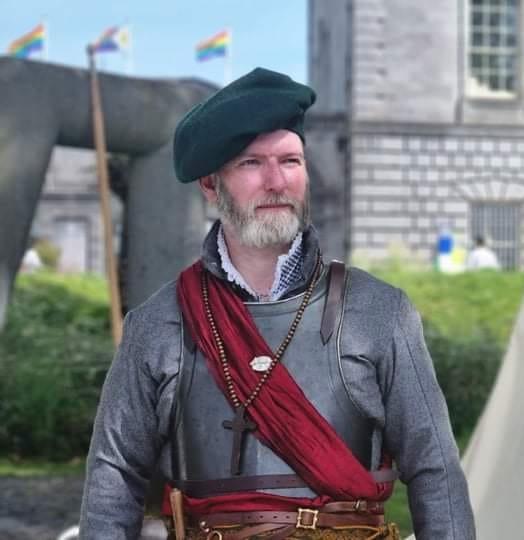
GarraíEoin Brian Ó Súilleabháin MhicRaith, An Ó Súilleabháin Mór, Hereditary Chief of the Name of the O'Sullivan Clan of Munster, Count of Knockgraffon.

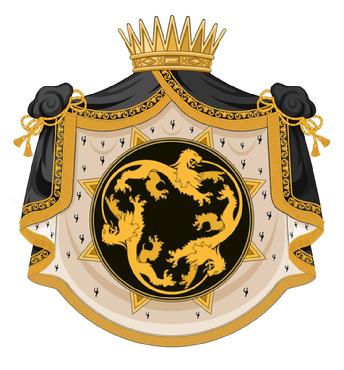
The Seal of Milesius, the official seal of the Clann Ó Súilleabháin Mhumhain (O'Sullivan Clan of Munster)

Mission of the Ó Súilleabháin Clann of Munster

1. To preserve and promote the tribal identity of the Ó Súilleabháin clan.

2. To preserve and promote the Gaelic identity of the Ó Súilleabháin clan, including the language, music, art, history, literature, theology, philosophy, myths, and legends of the Milesian Celts.

3. To support any historical research or activity that reveals the manners and customs of our ancestors.

4. To identify, recognize, and honor our ancestors.

5. To support yDNA research that supports the Milesian tradition and the noble pedigrees of the Ó Súilleabháin clan and to counter any proposals that contradict the beliefs of our ancestors.

6. To use yDNA data to properly identify to which of the sundry Ó Súilleabháin sub-septs each of our members belong.

6. To preserve and promote the tribal identity of the Ó Súilleabháin MhicRaith sept (Sliocht MhicRaith), including its birthright to the title, ‘The Ó Súilleabháin Mór, Hereditary Chief of the Name’, upon the extinction of the Ó Súilleabháin MhicRuairi line.

7. To establish and maintain a fully functional Gelfhine, Derbhfine, Íarfine, and Indfhine to administer the affairs of the Ó Súilleabháin Clan of Munster.

8. To follow the Laws of Tanistry in the conduct of the clan as interpreted and determined by the Derbhfine.

9. To commission the Derbhfine to identify and officially recognize the legitimate standing Irish clan chiefs and to seek and establish formal relations between the clans.

10. To seek and establish formal relations between the clans and other royal houses of the world, particularly the noble courts of Europe.

11. To embrace and defend the sacred relationship between the Irish clans and their ancestral lands.

12. To aggressively counter all anti-clan rhetoric and propaganda.


The Ó Súilleabháin Clann of Munster, Copyright 2009, 2010, 2011, 2012, 2013, 2014, 2015, 2016, 2017, 2018, 2019, 2020, 2021, 2022, 2023, 2024, 2025, 2026.